Blog
Gold Miner: Six Lessons on Time, Value, and AI Tools
Playing Gold Miner led me to reflect on time, value, AI tools, luck, and opportunity cost—and on leaving room to enjoy life along the way.
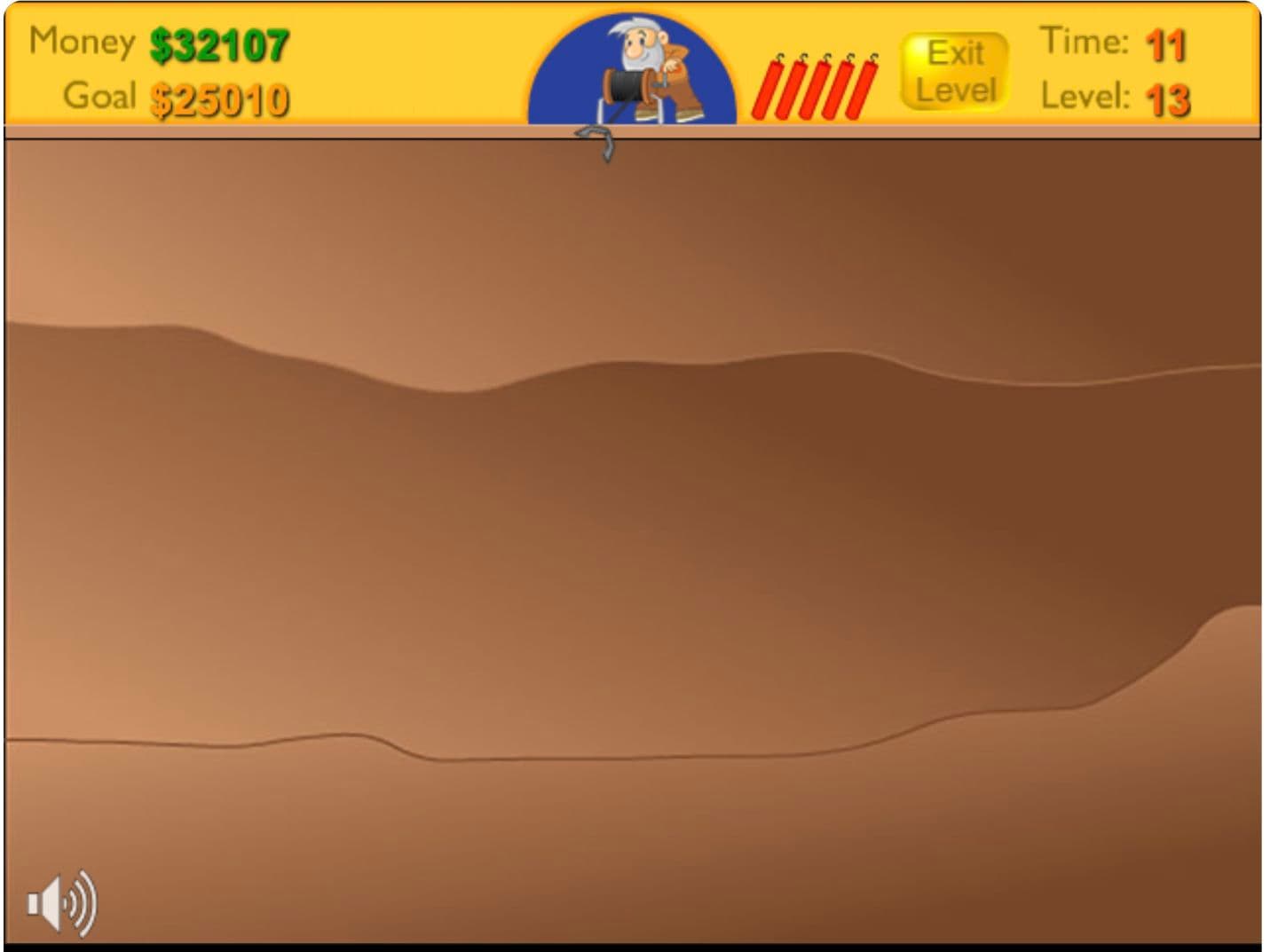
Recently, I watched a streamer playing Gold Miner. It looked fun, so I played a few rounds myself. What started as something to do when I was bored turned out to offer quite a bit to think about. This was a game I had known since childhood, yet playing it again brought to mind some recent thoughts about learning, work, and life. I wanted to write them down.
1. Small gains add up, but direction and pace matter too
There are gold nuggets of all sizes underground. The small ones are easy to grab, and each one brings in a little money. But every level has a countdown. If you keep going after small nuggets, you can work without a pause and still fall short of the target. It reminded me how often we say that small gains add up, while overlooking the fact that time is limited and accumulation has a cost. Doing something every day and moving closer to a goal every day are two things we need to check separately. In learning, understanding a little more each day and steadily advancing the same project can eventually produce something real. But watching a few unrelated tutorials every day may consume plenty of time without building the skills we actually need. Small steps are worth taking consistently, provided we know where they lead.
2. Size does not always tell you the value
In the game, a tiny diamond can be worth more than a large nugget of gold. At first, the big nuggets are hard to resist. Later, you realize that bigger does not necessarily mean a better return. The same happens in real life: an ambitious project may have no one who needs it, while a small feature might solve a problem someone faces every day. This feels especially relevant when building with AI and AI agents. We can make more and more things, but the real questions are what problem a product solves and who is willing to spend money, time, or effort to have it solved. It is easy to see our own busyness. Value needs to be tested in the real world.
3. Harder goals call for better use of tools
As the game progresses, the amount needed to clear each level rises. Keeping the same grabbing speed eventually becomes a struggle. Buying an item that boosts strength or increases the value of diamonds can help you achieve more in the same amount of time. It brought to mind a line from Xunzi’s Encouraging Learning: “The exemplary person is no different by nature, but makes good use of external aids.” Our time and energy have limits; tools can expand what we are able to do. That is how I think about AI, too. But items in the shop cost money, and tools have their own learning and usage costs. Before buying one, we need to understand what is holding us back. If the next level has few diamonds, even the best diamond upgrade may be of little use.
4. A tool’s value depends on the judgment that comes before using it
If I knew what the next level contained, I would have a clearer idea of what to buy now. In real life, though, we rarely get to see the next level. The challenge includes choosing with incomplete information and adjusting when our judgment turns out to be wrong. AI can help us do things faster, but it cannot make an untested direction correct. I increasingly feel that the more powerful our tools become, the more carefully we need to think before we act: What are we trying to solve? Why is it worth doing? What would count as success? Otherwise, moving faster may take us further from where we actually want to go.
5. Acknowledging luck makes reflection more useful
In the version I played, the shop’s selection changes randomly. Sometimes the item you need appears; sometimes you want to buy it and it is simply unavailable. The same judgment can produce different results under different conditions. Clearing a level does not mean all the credit belongs to our skill, and failing does not immediately mean we lack ability. To reflect usefully, we have to return to the moment of the decision: Given the information available then, was this a reasonable choice? What could we improve, and which conditions were beyond our control? Separating luck from judgment helps us see what to change next time.
6. Every grab means giving up another opportunity
When the hook is hauling up a low-value rock, the clock keeps ticking and the diamonds are still down there. The rock may bring in some money, but it takes up time that could have been spent grabbing something else. Many decisions in life work the same way. We need to ask what we will gain from doing something, and also what we are setting aside to do it. If we realize we have grabbed the wrong thing, we need to reassess. Whether it is worth continuing from this point matters more than how much time we have already spent. Of course, a slow haul does not necessarily mean a bad choice. Difficulty and a mistaken direction are different things, too.
Taken together, these moments in Gold Miner reminded me that, within our limited time, choices, tools, judgment, and luck all shape the outcome. Before sending the hook down again, it is worth asking: Is this grab worth the time it will take?
But a game has a clear target for passing each level. In life, we have to choose our own goals. Income and skills help us face the future with more confidence, while health, relationships, and everyday happiness also deserve our care. If we focus only on reaching the next level, life can easily become a game with no ending screen.
Go after the diamonds worth reaching for, and leave some room to enjoy the process. After all, when I first started playing, my only thought was: this is fun.